GLP-1 Medications: How to Choose One You Can Stay On
Most comparisons rank these drugs by trial averages. This one ranks them by what they ask of you week to week: dose steps, injection rhythm, refill logistics, and the months where people quit.
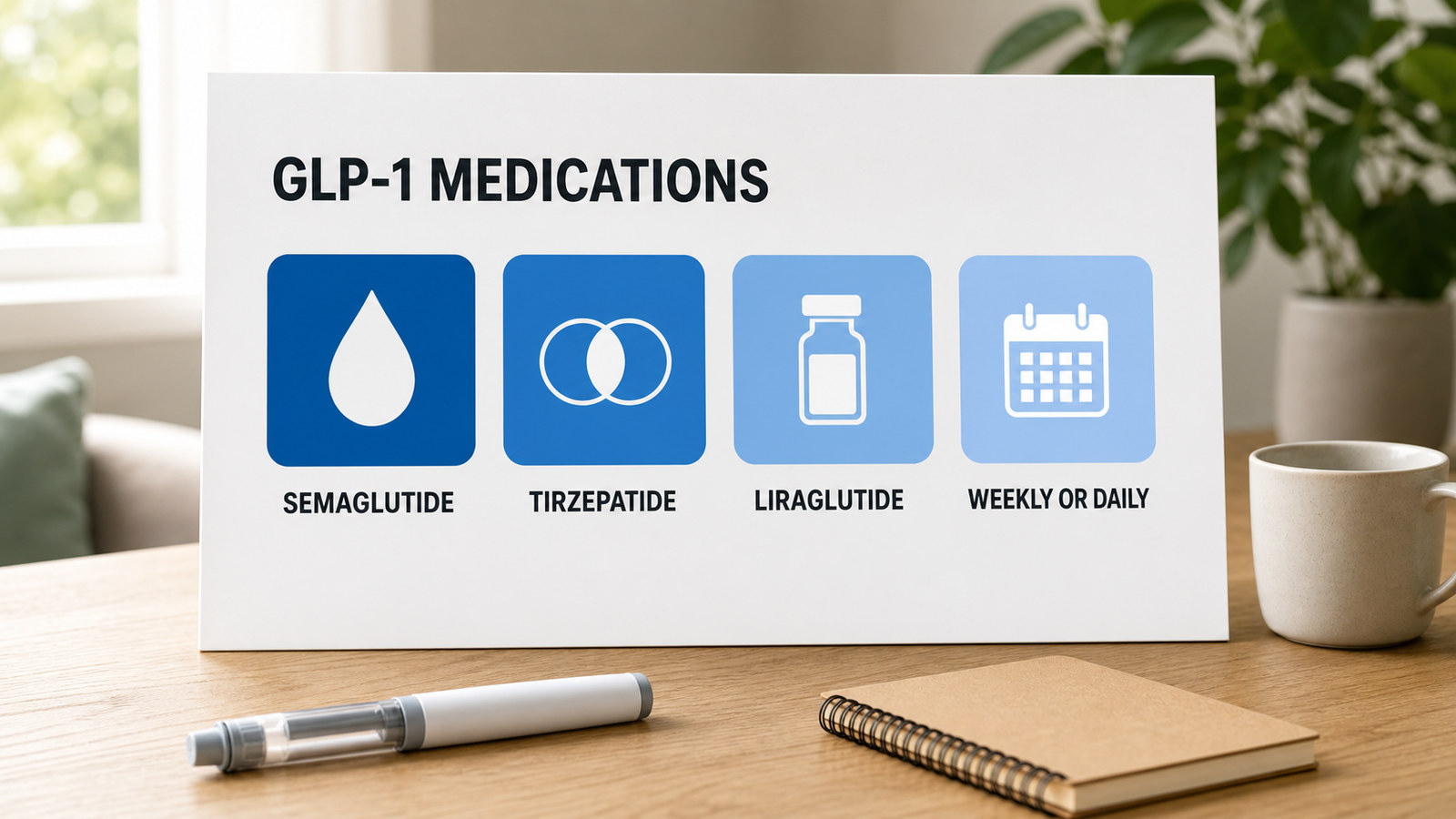
GLP-1 medications all do a version of the same thing. They mimic a gut hormone your body already makes after a meal, slow how fast the stomach empties, and turn down the background chatter about food. The biology is not where people get stuck. People get stuck on the parts nobody puts in the brochure: how many dose steps stand between you and a maintenance dose, whether the injection is weekly or daily, what happens when your plan renews in January, and which week the nausea tends to land.
If you want the full roster of what exists, including the products that never come up in a fifteen minute clinic visit, a maintained list of GLP-1 medications is a faster starting point than stitching it together from brand sites one at a time. This guide picks up where a list stops. It is about the lived shape of each option, because the drug that works is the drug you are still taking in month nine.
The options you will actually be offered
Four molecules cover almost every real prescription in the United States right now.
Semaglutide is a GLP-1 receptor agonist given once weekly by injection. It is sold as Wegovy for chronic weight management and as Ozempic for type 2 diabetes. There is also an oral tablet form, Rybelsus, approved for type 2 diabetes.
Tirzepatide works on two receptors, GIP and GLP-1, which is why you will see it called a dual agonist rather than a plain GLP-1. It is given once weekly by injection and is sold as Zepbound for chronic weight management and Mounjaro for type 2 diabetes.
Liraglutide is the older GLP-1 in this group and is injected once daily. Saxenda is the weight-management version, Victoza the diabetes version. Generic liraglutide has widened access to it.
Older weekly diabetes agents such as dulaglutide and exenatide belong to the same family but are approved for type 2 diabetes rather than weight management, so they rarely enter a weight-focused conversation.
The split that matters most for insurance is indication. Wegovy, Zepbound and Saxenda carry weight-management approvals. Ozempic, Mounjaro and Victoza are diabetes drugs, and prescribing them for weight alone is off-label, which is where prior authorizations tend to fall apart. Our full medication list covers every approved product in more detail.
What each one asks of you week to week
| Medication | Rhythm | Dose steps to maintenance | What that means in practice |
|---|---|---|---|
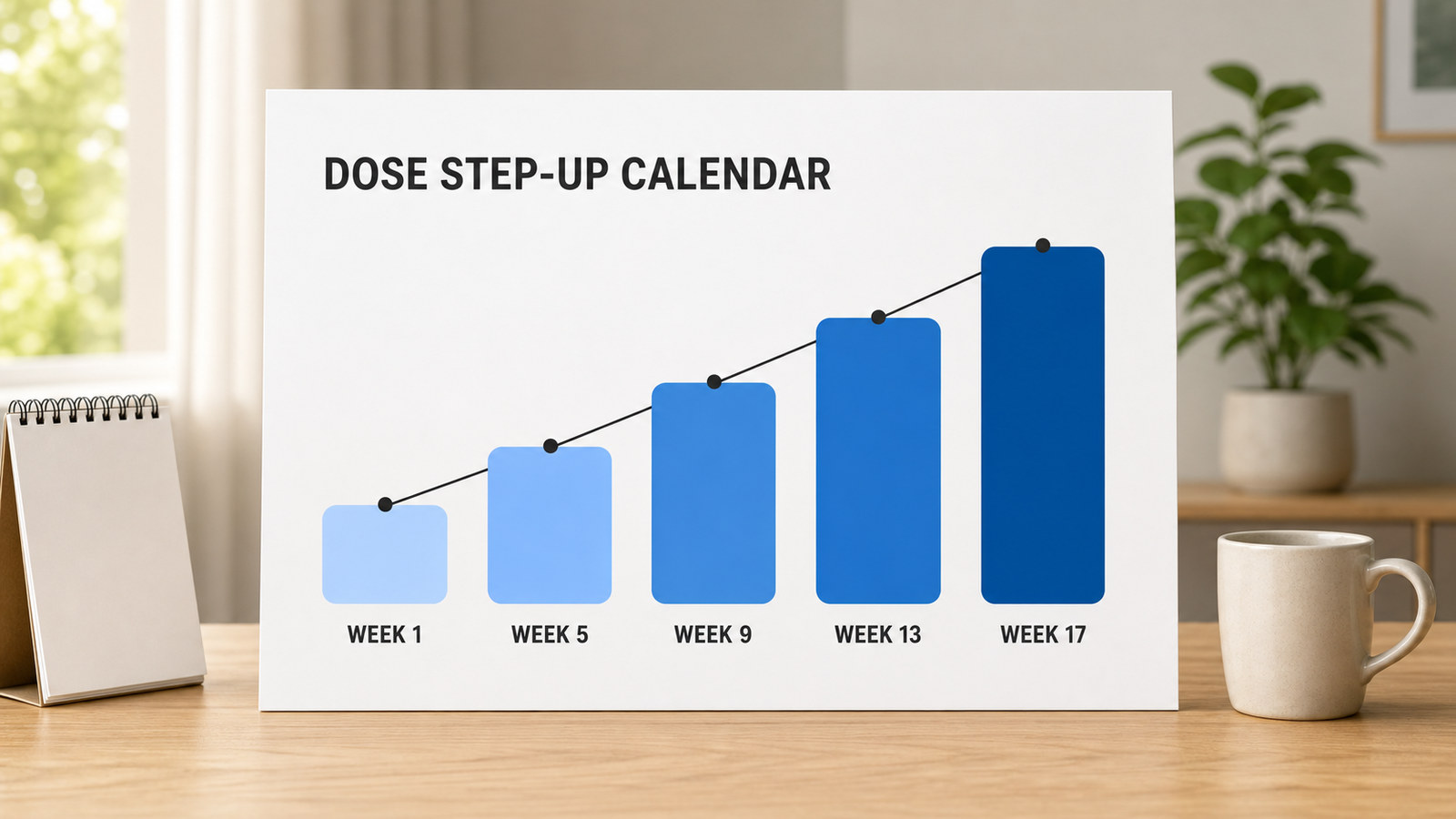
| Semaglutide (Wegovy) | Once weekly injection | Five levels, 0.25 mg up to 2.4 mg, four weeks per step | Roughly four months of climbing before you reach the labelled maintenance dose. A high-dose 7.2 mg option exists for people who need more. |
| Tirzepatide (Zepbound) | Once weekly injection | Up to six levels, 2.5 mg up to 15 mg, minimum four weeks per step | The longest ladder, but also the most rungs to stop on. Many people settle below the top dose and stay there. |
| Liraglutide (Saxenda) | Once daily injection | Weekly steps up to 3.0 mg | You reach full dose in about a month, then inject every single day. No missed-week problem, no week off either. |
| Oral semaglutide (Rybelsus) | Once daily tablet | Three levels | No needles, but strict rules: empty stomach, a small sip of plain water, then nothing for half an hour. Approved for type 2 diabetes. |
Read that table as a lifestyle question rather than a pharmacology one. A weekly injection suits people who would rather deal with treatment once and forget it, and who can tolerate the fact that a rough week is a whole rough week. A daily medication suits people who already have a morning routine to hang it on and who prefer smaller, more frequent adjustments. Neither is more serious than the other.
What the trial data actually supports
Two numbers get quoted constantly, and both deserve their context.
In SURMOUNT-1, tirzepatide at 15 mg produced mean weight loss of about 20.9 percent at 72 weeks. In STEP 1, semaglutide at 2.4 mg produced about 14.9 percent at 68 weeks. Liraglutide trials in the SCALE programme landed meaningfully lower, in the high single digits as a percentage of body weight. On population averages, that ordering has held up, and the 2025 head-to-head SURMOUNT-5 trial again favoured tirzepatide on weight endpoints.
Three caveats change how you should use those figures. They are means, and the spread around them is wide: plenty of participants lost far more, and a real minority lost very little. They were achieved alongside structured diet and activity support built into the trial, not on the drug alone. And in the STEP 1 extension, participants regained roughly two-thirds of what they had lost within a year of stopping, which is the single clearest argument for treating these as long-term medications rather than a course you finish.
There is also more to the class than the scale. Semaglutide has cardiovascular outcome data behind it, and the weight-management label reflects that. If you have established heart disease, sleep apnea, fatty liver or type 2 diabetes, the right medication may be decided by which condition your prescriber is treating rather than by which trial mean is largest.
The four things that actually end a course
Almost nobody stops because the medication failed to work. People stop for one of these four reasons, and each has a countermeasure worth planning before you start.
Side effects that land in the wrong week. Nausea, reflux and constipation cluster in the days after a dose increase, not evenly across the month. If you know a step-up is coming, do not schedule it the week of a holiday, a long flight or a work deadline. Ask your prescriber in advance whether holding a dose for an extra few weeks is acceptable, because for most people it is, and a hold beats quitting.
Coverage that changes underneath you. Formularies reset. A drug covered in one plan year can require a new prior authorization in the next, or drop off entirely. Note your plan's renewal date now and start the paperwork weeks ahead of it rather than when the pharmacy refuses the refill.
The refill gap. Prior authorizations, pharmacy stock and shipping delays create gaps. A gap of a week or two at a stable dose is usually manageable, but a longer one can mean restarting lower and re-climbing. Order refills at least a week early once you find a dose that works.
Reaching a goal and treating it as the finish line. This is the quiet one. The regain data is unambiguous, and the plan for what happens after the loss phase should exist before you get there, not after. Maintenance is a phase of treatment, not the end of it.
A framework to bring to your prescriber
Print this or paste it into your phone notes. It takes a fifteen minute appointment further than an open-ended question about which drug is best.
- What is being treated? Weight alone, weight plus type 2 diabetes, sleep apnea, or cardiovascular risk. This decides which products are on-label for you and which will fight your insurer.
- What is on my formulary this plan year, and when does it renew? Ask for the covered option first and the preferred one second.
- How much titration runway do I have? Count backwards from any surgery, pregnancy plan, major trip or event. Four months of dose climbing is normal, and starting six weeks before a big life event rarely goes well.
- Weekly or daily: which will I actually remember? Be honest rather than aspirational.
- What is the plan if side effects are worse than expected? Get the answer in advance: hold the dose, step back down, or stop. Knowing the fallback is what keeps people from quitting outright at month two.
- What does maintenance look like, and what if I need to stop? Ask what the lowest effective dose might be and how a pause would be handled.
What the first six months usually looks like
Weeks one to four are mostly about the starting dose, which is deliberately too low to do much. Appetite changes are often noticeable anyway, and early side effects are usually mild and settle. Our week one guide walks through what people typically report.
Weeks five to twelve are the titration stretch. Each step up tends to bring a few harder days followed by a new normal. Weight loss in this window is usually uneven rather than linear, and comparing your curve to someone else's is the fastest route to unnecessary discouragement. The semaglutide dosing schedule lays out the standard steps and the flexibility around them.
Weeks thirteen to twenty-four are where habits either consolidate or do not. Protein intake, resistance training and sleep stop being optional extras here, because the appetite suppression that makes eating less easy also makes eating badly easy. This is also the window where a first plateau is common and normal.
Common questions
Common Concerns
Which of the GLP-1 medications is the strongest?expand_more
Can I switch from one GLP-1 to another?expand_more
Is a weekly injection better than a daily one?expand_more
How much do GLP-1 medications cost?expand_more
Do I have to stay on a GLP-1 forever?expand_more
Keep exploring
Browse all GLP-1 guides on GLP1 Protocol, or read the head-to-head on tirzepatide and semaglutide.