FLGR-242 Review and Discount Code: What Exists So Far
A listing came first, then a price, then a set of claims. The independent record has not arrived yet.
FLGR-242 reached a product page before it reached the literature, and that order explains most of what follows. A search for the name returns a vendor, a price and a description; it returns nothing from PubMed and nothing from ClinicalTrials.gov. This page sets out what the seller states, where the seller contradicts itself, what has not been published, and where the offer sits if you decide the unresolved parts do not stop you.
Where the order actually gets placed
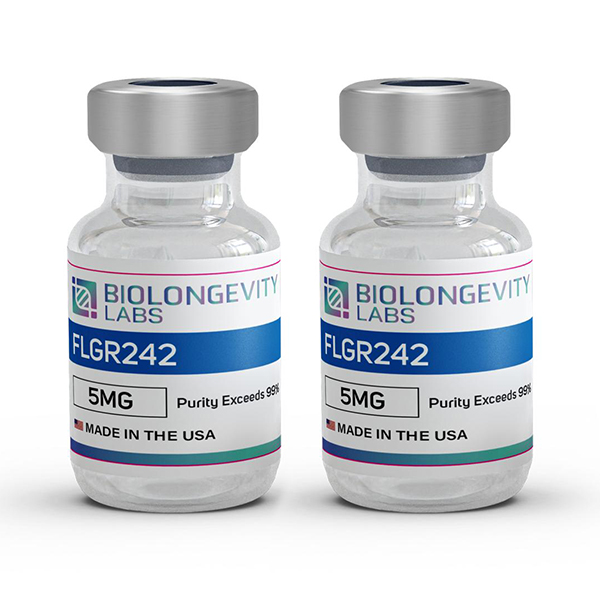
Bio Longevity Labs, FLGR242 5mg Research Peptide
Sold in pairs. One pair is two 5 mg vials, 10 mg in total. The code goes in at the checkout step. We have not verified what percentage it returns, so this page does not quote one.
Volume tiers run 5% at six pairs, 10% at twelve, 15% at twenty-four and 20% at forty-eight. A sitewide banner sale was also running when we checked, and a banner sale is temporary while this page is not, so $499.00 list is the figure quoted here.
- Code Peptidedeck, applied at checkout
- List price checked September 8, 2026
- No certificate published for this product at the time of checking
Research material for laboratory use, not for human consumption. FLGR-242 holds no marketing authorisation in any market and has never been studied in a human trial. Affiliate link, so we may earn a commission at no cost to you. List price last checked September 8, 2026.
What FLGR-242 is, in the order the description gives it
First, the spelling, because it splits the search demand. The vendor writes it as FLGR242 with no hyphen, and sells it at biolongevitylabs.com as "FLGR242 5mg Research Peptide". Readers arrive typing FLGR-242, FLGR 242 and FLGR242, and all three point at the same listing.
Then the description itself. In the seller's words, this is "a novel fragmented, modified version of Follistatin-344 (FST-344) that does not bind to the protein activin", which "contains a patented albumin binder", specifically a "Follistatin protein (FST) fused with an albumin-binding construct that uses a hydrophilic glycine-serine linker to achieve high-affinity binding to serum albumin".
| Vendor-stated property | Value given on the listing |
|---|---|
| Type | Follistatin-albumin binding construct |
| Linker sequence | GGSGGSGGSGGRLIEDICLPRWGCLWEDD |
| Molecular weight | around 40 kDa |
| Albumin binding affinity | <20 nM Kd |
| Synonyms given | FST-Albumin Construct, Extended Half-Life Follistatin |
| Vial | 5 mg, sold as pairs of two vials, 10 mg per pair |
| Manufacturing claim | US GMP, third-party verified |
That table settles the first question people arrive with, which is usually phrased as a search for the FLGR-242 peptide. At around 40 kDa this is a recombinant glycoprotein, not the short synthetic chain the word peptide normally signals. For comparison, the compounds usually sold beside it run to a few thousand daltons at most. The distinction is not pedantry. Size governs how a molecule is produced, how it is stored, how it behaves once diluted, and what a purity assay is even measuring. Most competing pages skip it, which is how a protein construct ends up filed alongside short peptides as though the same rules applied.
FLGR-242 vs follistatin-344, and the two steps in between
Follistatin-344 is a naturally occurring isoform of a protein the research literature has studied for decades. FLGR-242 is not that molecule, and the vendor does not claim it is.
Read the description as a sequence and two engineering steps appear. Step one, the follistatin-344 starting point is fragmented and modified, which the seller says removes activin binding. Step two, the result is fused to an albumin-binding construct through the glycine-serine linker quoted above, so the finished molecule sticks to serum albumin with high affinity.
The purpose of step two is not hidden. Albumin binding is a half-life extension strategy, and the vendor's own alternative name for the product is "Extended Half-Life Follistatin". That is a coherent piece of protein engineering as a stated design goal. It is also, in the plainest terms, two moves away from the molecule the papers were written about. Anyone searching for FLGR 242 vs follistatin 344 is really asking whether the older evidence transfers, and the honest answer is that a fragmented, modified, albumin-fused derivative is a new entity that has to be characterised on its own.
The activin contradiction, three statements on one page
This is the part a reader cannot resolve alone, and it is the reason this review exists.
The product description says FLGR242 "does not bind to the protein activin". The meta description and social card for the same page say the compound is "Studied for myostatin inhibition and activin binding". The research applications section, still on that same page, lists "activin neutralisation assays".
Those are three positions on one question, published simultaneously by the same seller. The stakes are not cosmetic. Follistatin's established mechanism is high-affinity binding and neutralisation of activins and related TGF-beta ligands; that is the thing follistatin is known for. A follistatin construct that genuinely did not bind activin would be a substantially different molecule with a substantially different rationale, and the same listing offers it for activin neutralisation assays, which is a use that presupposes the binding the description denies.
One of those statements is wrong. Nothing published anywhere indicates which, and the buyer is the one holding the question.
The certificate is advertised before anyone can read it
The page title carries "COA Included" and the description promises comprehensive COAs. The seller does run a public certificate library, at biolongevitylabs.com/all-coas/, which is more than many vendors bother with.
When that library was checked on September 8, 2026, it held eight PDFs. Not one of them covered follistatin or FLGR242. The published set was Cortagen, plus endotoxin reports for BPC-157 with TB-500, CJC-1295 with ipamorelin, DSIP, retatrutide, SS-31 and tesamorelin.
The sequence is the problem. A certificate that exists only after the order has been paid for arrives after the moment it would have been useful. Checking documentation before buying is the entire point of documentation, and for this product that check currently returns nothing. This may change, and the library is worth looking at again before ordering rather than taking this page's word for it.
What the independent record holds, and when
Nothing, at any date so far.
PubMed returns zero results for FLGR-242 and zero for FLGR242. ClinicalTrials.gov returns zero records. Not sparse, not preliminary, not early. Zero.
The listing does cite twelve papers, and we checked a sample of them rather than assuming. They are real. Systemic administration of follistatin288 and its effect on muscle mass was published in 2013 in mice (PMID 23942549). Nanoparticle-mediated hepatic delivery of follistatin mRNA was published in 2018, also in mice (PMID 30555546). Follistatin in non-alcoholic fatty liver disease acting through mTOR signalling was published in 2022 (PMID 36325432).
Every one of them is a genuine study of follistatin, largely in rodents. None of them studied FLGR-242. Citing the literature of a protein family under a proprietary product name is how a new construct borrows an evidence base it has not earned, and the borrowing is invisible unless somebody opens the citations.
| What the listing offers | Where it actually comes from | What it does not establish |
|---|---|---|
| Myostatin inhibition | Follistatin literature, mouse studies | Anything measured for this construct |
| Activin neutralisation | Follistatin's known biology, contradicted elsewhere on the same page | Whether this construct binds activin at all |
| Extended half-life | A stated design goal of the albumin binder | A measured half-life for this construct in any species |
| Twelve supporting papers | Real follistatin papers, mostly rodent | That any of them tested FLGR-242 |
| Third-party verified manufacturing | Vendor statement | A published certificate a buyer can read first |
FLGR-242 for sale: what the price covers
Pricing was checked on September 8, 2026, and the sale line is dated deliberately because a banner sale ends and this page does not.
| Purchase unit | Price as listed |
|---|---|
| One pair, 10 mg as two 5 mg vials | $499.00 list |
| Same pair, price shown during the sitewide sale that day | $249.50 |
| Largest bulk pack, 48 pairs, 96 vials | up to $19,161.60 list |
| Volume tiers | 5% at 6 pairs, 10% at 12, 15% at 24, 20% at 48 |
The discount code is Peptidedeck, entered at checkout. We have not verified what percentage it returns and will not print a number we have not seen for ourselves, which is the same standard applied to everything else on this page.
Worth holding both figures in view at once. A pair at list is $499.00 for a compound with no published certificate, no independent literature and an unresolved contradiction in its own description. The sale price lowers the cost of the purchase; it does not change anything in the two sections above.
Why there is no FLGR-242 dosage section here
Searches for FLGR-242 dosage are common, and this page answers them by declining.
There is no human trial of this construct, no regulatory authorisation anywhere, and no published protocol for the named molecule in any organism. A dosage figure requires a study that established it, and no such study exists. Numbers circulating online for this product have therefore come from somewhere else, which in practice means rodent follistatin work transposed onto a fused, modified derivative that behaves differently by design. The albumin binder alone is intended to change how long the molecule persists, which is precisely the variable a transposed figure would get wrong.
It is sold as research material for laboratory use. That framing is the seller's own, and it is the only framing the evidence supports.
Where the sequence stands today
In order of what has actually happened. A product listing exists. A price exists, and a discount code with it. A detailed technical description exists, and contradicts itself three times on the question of activin. A certificate is advertised and has not been published for this product. And no independent study of FLGR-242, by any spelling, exists in the medical literature or the trial registry.
That is the full record as of September 8, 2026. Carrying the offer and reporting the gaps are not in tension: a reader who buys after reading this knows what is unresolved, which is more than the listing alone provides. If the certificate is published or the activin question is answered, the sequence moves forward and this page will need rewriting. Nothing of the kind has happened yet.